Are you interested in building AI systems that are not only powerful, but also trustworthy, human-centered, and beneficial for real-world applications? CoSTA NUS Lab at the National University of Singapore is recruiting a fully funded PhD student for the Spring 2027 intake.
The PhD student will join the Cognitive Science & Trustworthy AI Lab (CoSTA NUS) in the Department of Electrical and Computer Engineering at the National University of Singapore. The lab explores the frontier where human minds meet machine intelligence, with a focus on trustworthy AI, cognitive science, machine learning, large language models, and AI for healthcare.
The position is advised by Prof. Junyuan Jason Hong, Assistant Professor at NUS ECE. Prof. Hong’s research lies at the intersection of responsible AI, trustworthy machine learning, privacy, and healthcare applications. Before joining NUS, he worked with Massachusetts General Hospital and Harvard Medical School, and previously completed postdoctoral training at the University of Texas at Austin. His work has been recognized by the MLSys Rising Stars program, received a VLDB 2024 Best Paper Finalist recognition, and has been covered by major public and scientific media outlets.
Research in trustworthy and human-centered AI: Conduct original research on topics such as AI safety, reliable and responsible LLMs, trustworthy machine learning, cognitive mechanisms of AI systems, human-AI interaction, and AI for healthcare.
Independent PhD project development: Develop and lead a PhD research agenda, from problem formulation and literature review to method design, implementation, experimentation, and publication.
Empirical and computational research: Build and evaluate machine learning systems, large language model pipelines, benchmarks, datasets, and experimental protocols.
Scientific communication: Publish research findings in top-tier machine learning, AI, data science, and interdisciplinary venues, and present work at international conferences and workshops.
Collaborative research: Work closely with lab members and collaborators across AI, cognitive science, healthcare, and responsible AI communities.
Applicants should have, or expect to obtain, a Bachelor’s or Master’s degree in a relevant field such as computer science, electrical and computer engineering, data science, statistics, applied mathematics, cognitive science, biomedical informatics, or a related discipline.
Strong candidates will bring:
Experience in one or more of the following areas would be especially valuable:
Fully funded PhD position: One fully funded PhD position is available for the Spring 2027 intake.
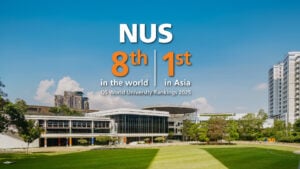
Research at a leading global university: Join the National University of Singapore, a highly international research university with a strong ecosystem in AI, engineering, computing, healthcare, and interdisciplinary research.
Interdisciplinary research environment: Work at the intersection of machine learning, trustworthy AI, cognitive science, and healthcare.
Mentorship and career development: Receive close mentorship in research design, paper writing, academic presentation, collaboration, and long-term career development.
International collaboration: Engage with collaborators across universities, research institutes, and interdisciplinary communities.
Location in Singapore: Study and conduct research in Singapore, a major hub for AI, technology, biomedical research, and international academic collaboration.
Candidates from underrepresented backgrounds are especially encouraged to apply.
CoSTA-NUS Lab, short for Cognitive Science & Trustworthy AI Lab, is led by Prof. Junyuan Jason Hong in the Department of Electrical and Computer Engineering at the National University of Singapore.
The lab aims to understand, evaluate, and improve AI systems through the lens of trustworthy AI and cognitive science. Its research interests include responsible AI, privacy, AI safety, reliable LLMs, cognitive mechanisms of AI systems, human-AI interaction, and AI applications in high-impact domains such as healthcare.
The broader goal of the lab is to develop AI systems that are technically strong, scientifically grounded, and aligned with human and societal needs.
Tagged as: Computer Science, Engineering